
A HEPA filtration system is designed to remove extremely small airborne particles with exceptional efficiency, making it an essential solution for industries that demand clean, contaminant-free air. Whether you’re managing a cleanroom, pharmaceutical process, or lab environment, understanding how HEPA filters work—and when to use them—can help you maintain regulatory compliance and protect both product quality and worker health.
This guide explains what HEPA filtration is, how these systems work, where they are used, and why they matter for industrial applications.
What Does HEPA Mean?
HEPA stands for High-Efficiency Particulate Air. A filter qualifies as HEPA if it can remove at least 99.97% of airborne particles measuring 0.3 microns in diameter. This includes:
-
Fine dust and smoke
-
Mold spores and pollen
-
Bacteria
-
Aerosols and certain viruses
-
Other submicron contaminants
These filters are critical in settings that require extremely clean air or where air contamination poses health or product risks.
How Does a HEPA Filtration System Work?
HEPA filters are made of dense mats of randomly arranged fibers, typically composed of fiberglass or synthetic material. These filters capture particles through several mechanisms:
-
Interception – Particles traveling in the airstream adhere to a fiber
-
Impaction – Larger particles collide directly with fibers and are trapped
-
Diffusion – Ultrafine particles are slowed and diverted by air molecules, increasing the chance they contact a fiber
The result is a filtration system that can trap particles much smaller than what traditional filters can handle.
Key Components of a HEPA Filtration System:
-
Pre-filter – Captures larger particles to extend HEPA filter life
-
HEPA filter – The core component for fine particle capture
-
Fan or blower – Moves air through the system at a controlled rate
-
Housing or enclosure – Maintains filter integrity and prevents bypass leaks
Industrial Applications of HEPA Filtration Systems
HEPA filters are used in both portable and central air filtration systems across a wide range of industries, including:
-
Pharmaceutical and biotech manufacturing
-
Semiconductor and electronics production
-
Food and beverage processing
-
Medical and hospital environments
-
Laboratories and cleanrooms
-
Aerospace and defense manufacturing
HEPA systems are often used in combination with activated carbon filters or ultra-low particulate air (ULPA) filters for enhanced filtration performance.
Benefits of Using HEPA Filtration Systems in Industrial Settings
-
High-efficiency particle removal down to 0.3 microns
-
Improved indoor air quality for workers and processes
-
Regulatory compliance with FDA, OSHA, ISO, or cleanroom standards
-
Protection of sensitive equipment from contamination
-
Support for sterile or controlled environments
CPE Filters designs HEPA systems for both standalone use and integration into larger dust collection or HVAC systems.
HEPA Industrial Air Filtration Systems
HEPA air filtration systems are specifically designed to meet HEPA standards or filtration at or above MERV 17.
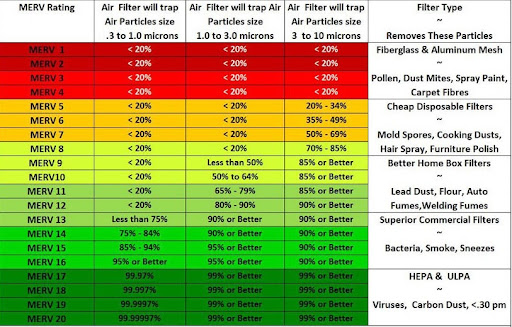
Filtration for various MERV ratings
Particularly so for industrial dust collection applications, the HEPA filtration system must provide maximum air cleaning efficiency combined with extremely high particulate removal required for the given workplace and/or production environment. These systems may be either stand-alone units for use in smaller spaces or can be integrated with standard pulse-jet style dust collector systems. If HEPA level filtration is not required, MERV 11 to MERV 16 filters may be a reasonable cost alternative to provide secondary filtration in the event the filtered air is to be returned back to the workspace.
HEPA Filter Maintenance and Replacement
HEPA filters are not cleanable and must be replaced once they reach their maximum dust loading capacity. Signs it’s time to replace your HEPA filter include:
-
Reduced airflow or pressure drop
-
Failure to meet required air quality standards
-
Visible contamination or discoloration
-
Scheduled preventive maintenance cycle
CPE Filters can help you monitor performance and recommend filter replacement intervals based on your application.
Frequently Asked Questions (FAQs)
Are all HEPA filters the same?
No. True HEPA filters must meet strict standards for efficiency (99.97% at 0.3 microns). Always verify performance specs before purchasing.
Can I use HEPA filters in a dust collector?
Yes, but they are typically used in final-stage filtration for sensitive applications. They are not ideal for handling high dust volumes unless paired with pre-filters or a multi-stage system.
How often should HEPA filters be changed?
Filter life depends on the application and air quality. In most industrial environments, HEPA filters should be replaced every 6–12 months, or as recommended by system pressure and compliance needs.
Get HEPA Filtration Solutions Tailored to Your Industry
At CPE Filters, we engineer custom HEPA filtration systems for industries that can’t afford to compromise on air quality. From cleanroom design to pharmaceutical-grade air filtration, our systems are built to meet strict performance and safety standards.
For more information on HEPA industrial filtration systems or to discuss your company’s HEPA filtration requirements, contact CPE Filters today.