
Home / Products / Pulse Cleaning / Filter Receivers
Filter Receivers
Separating conveyed material from its transport air at the end of a pneumatic line — recovering product rather than collecting waste.
Product overview
Product Recovery, Not Dust Disposal
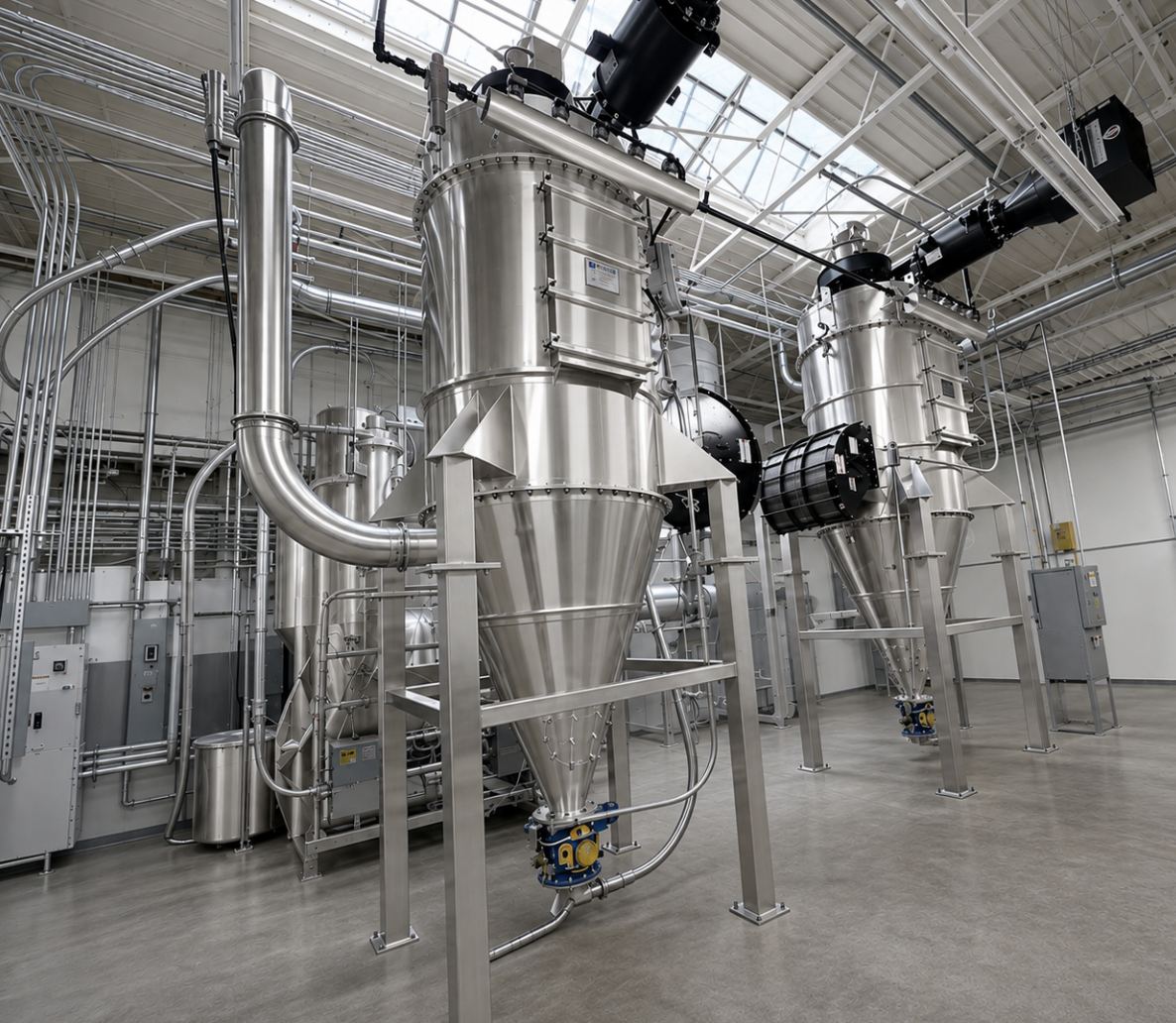
A filter receiver sits at the terminal end of a pneumatic conveying line. Its job is separation: the conveyed material drops out and continues into the process, while the transport air is filtered and discharged clean.
That makes it a materially different device from a dust collector, even though the internals look similar. A dust collector treats what it captures as waste. A receiver treats it as product — which drives design decisions around discharge geometry, residual holdup, cleanability, and the gentleness of the pulse cleaning.
Receivers are specified on vacuum and pressure conveying systems across food, chemical, plastics, and mineral processing, wherever material is moved pneumatically between vessels or process steps.
Receiver or bin vent? A receiver terminates a conveying line and discharges product onward. A bin vent sits on the vessel itself and returns dust into it. Both handle a single point; the difference is where the material goes next.
Key features
Configuration & Capability
Product Recovery
Discharge geometry designed to release material cleanly rather than retain it.
- Steep cone angles to prevent bridging
- Minimal residual holdup
- Rotary airlock or slide gate discharge
Gentle Pulse Cleaning
Low-pressure pulsing releases the cake without degrading friable product.
- Timer or ΔP initiated
- Tuned to product characteristics
- Reduced compressed air demand
Sanitary Construction
304 and 316L stainless with finishes suited to food and pharmaceutical duty.
- Smooth internal welds
- Crevice-free detailing
- Wash-down capable configurations
Vacuum or Pressure Duty
Housings rated for the conveying system they terminate.
- Vacuum-rated construction available
- Pressure-rated designs to specification
- Sized to conveying air volume
Technical specifications
Specifications
Standard ranges — every unit configured to application
| Conveying phase | Dilute or dense phase |
| Housing construction | Carbon steel; 304 / 316L stainless |
| Filter media | Polyester, food-grade, PTFE membrane options |
| Cleaning system | Low-pressure pulse jet |
| Discharge | Rotary airlock, slide gate, or direct to vessel |
| Shipping | Fully assembled |
Compliance & safety
Engineered to the Standards You’re Audited Against
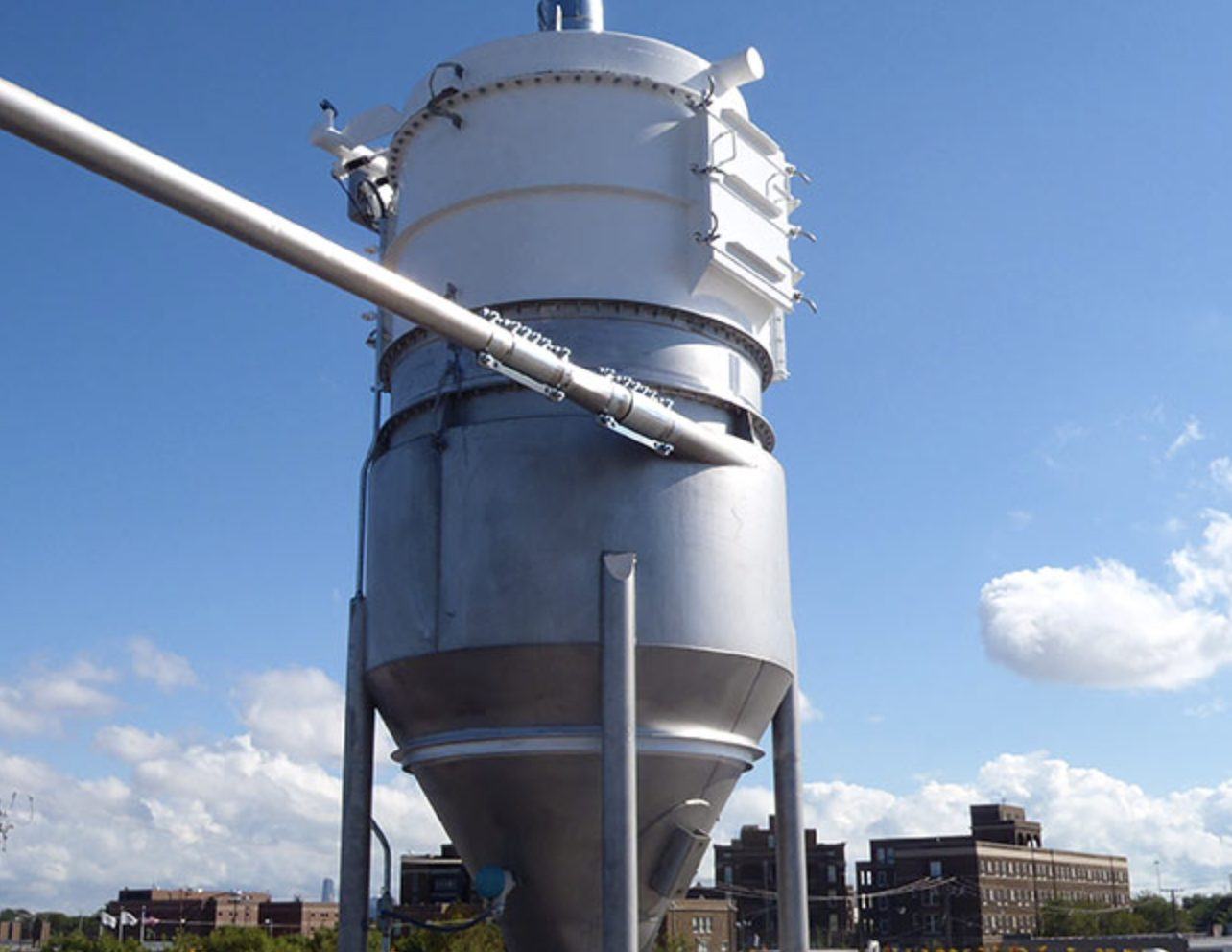
Where the dust is combustible, filtration efficiency is only half the design problem. We integrate deflagration venting, explosion isolation, spark detection, and grounding provisions specified against your Dust Hazard Analysis — not bolted on afterwards.
ATEXFM GLOBALMSHAUL / CSA
Industries
Where It Works
Sanitary
Food Processing
Flour, sugar, starch, and dry ingredient transfer between silos and process.
Product recovery
Plastics
Resin pellet and regrind conveying to extruders and moulding machines.
Containment
Chemical
Powder intermediate transfer with containment and corrosion requirements.
Abrasive
Minerals
Fine mineral powder conveying in cement, lime, and specialty aggregate.
GMP
Pharmaceutical
API and excipient transfer under GMP conditions.
Bulk
Pet Food & Agriculture
Meal, premix, and additive handling.
Proof
In Service
Chemical
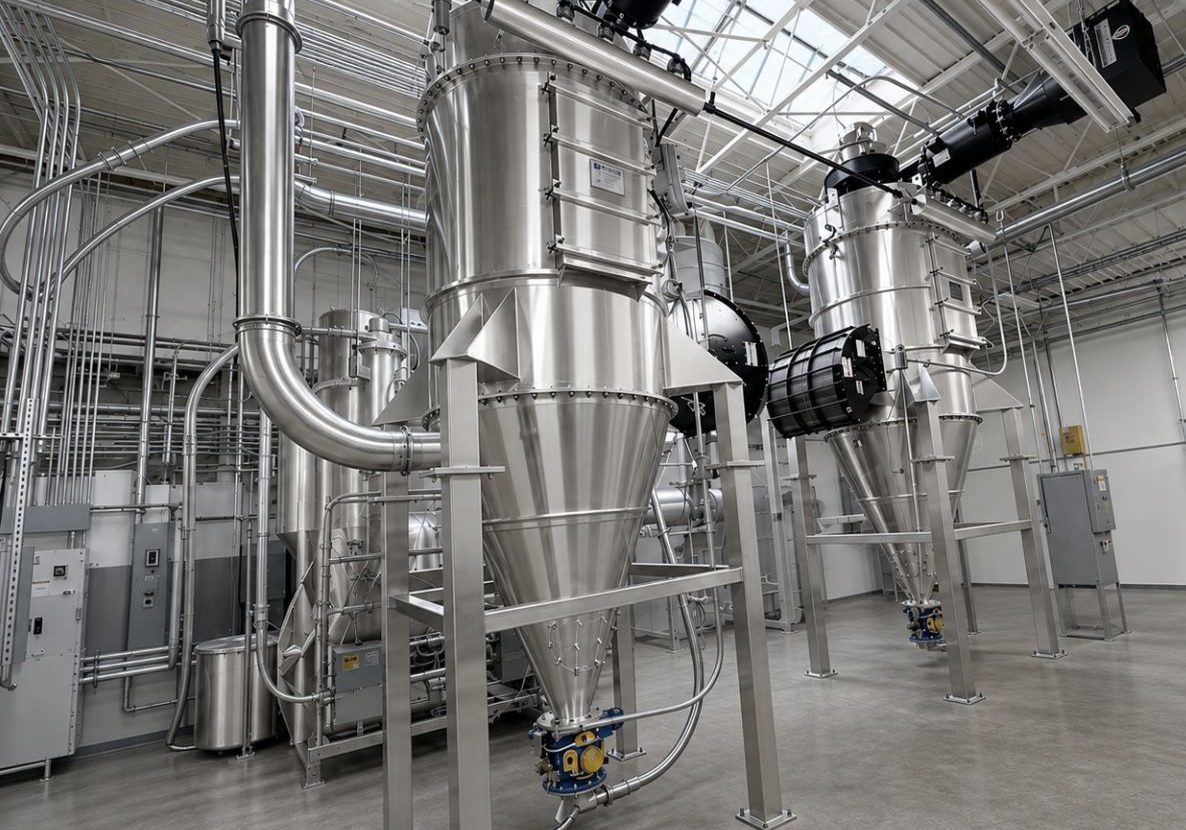
316L collector for corrosive, combustible chemical dust
Bag life +50%, capture efficiency +14%
Common questions
FAQs
How is a filter receiver different from a dust collector?
A receiver terminates a pneumatic conveying line and discharges the conveyed material onward into the process. A dust collector captures fugitive dust from multiple pickup points and discharges it as waste. The internals are similar; the intent, and therefore the discharge design, is not.
Can receivers handle sanitary duty?
Yes. 304 and 316L construction with smooth internal welds, crevice-free detailing, and wash-down capability are standard options for food, dairy, and pharmaceutical service.
What about friable products?
Pulse pressure and cleaning frequency are tuned to the material. Where product degradation is a concern, lower-pressure cleaning and a more conservative air-to-cloth ratio both help.
Tell Us About Your Application
Send us your airflow, dust type, temperature, and plant constraints. Our engineers will size and configure a system for your process — and tell you plainly if something else would serve you better.