
Home / Capabilities / Total System Approach
Total System Approach
Hood, duct, collector, fan, discharge — designed together, because that is how they fail.
Total system approach
The Collector Is One Component of Five
A dust collection system is a capture hood, a duct network, a collector, a fan, and a discharge. If any one of those is wrong, the system underperforms — and in our experience the collector is the least likely of the five to be the actual problem.
Quoting a collector against a written specification is easy and it is how most of this industry works. It also means nobody takes responsibility for whether the specification was right in the first place.
We start further back: what generates the dust, where it needs to be captured, how it gets to the collector, what happens to it afterwards, and what the plant will realistically maintain.
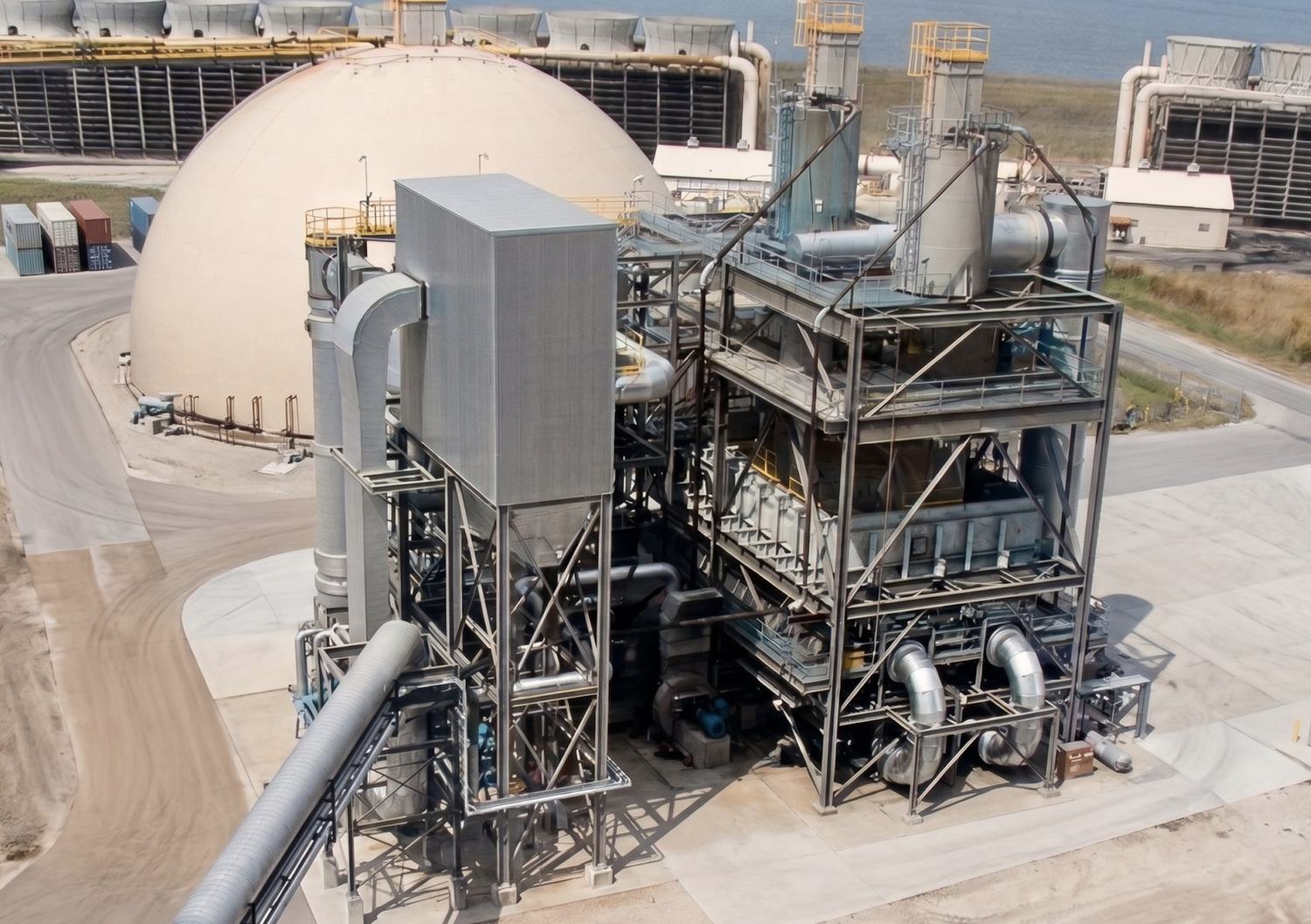
The five components
Where Systems Actually Fail
Capture hood
If dust escapes at the source, nothing downstream can recover it. Hood geometry and face velocity decide how much of the problem you ever see.
Ductwork
Velocity too low and dust settles; too high and you pay for pressure drop forever. Branch balance decides whether the far pickup point gets any airflow at all.
Collector
Air-to-cloth ratio and media selection determine filter life and stable differential pressure. Usually correct, and usually blamed.
Fan
Sized for the system curve including realistic filter loading, not for clean-filter conditions that exist for one week a year.
Discharge
Airlocks that bridge, hoppers that pack, and conveyors that back up will stop a perfectly good collector within hours.
Maintainability
A system your team cannot access safely will not be maintained, whatever the drawing says.
Proof in service
Where this has been done
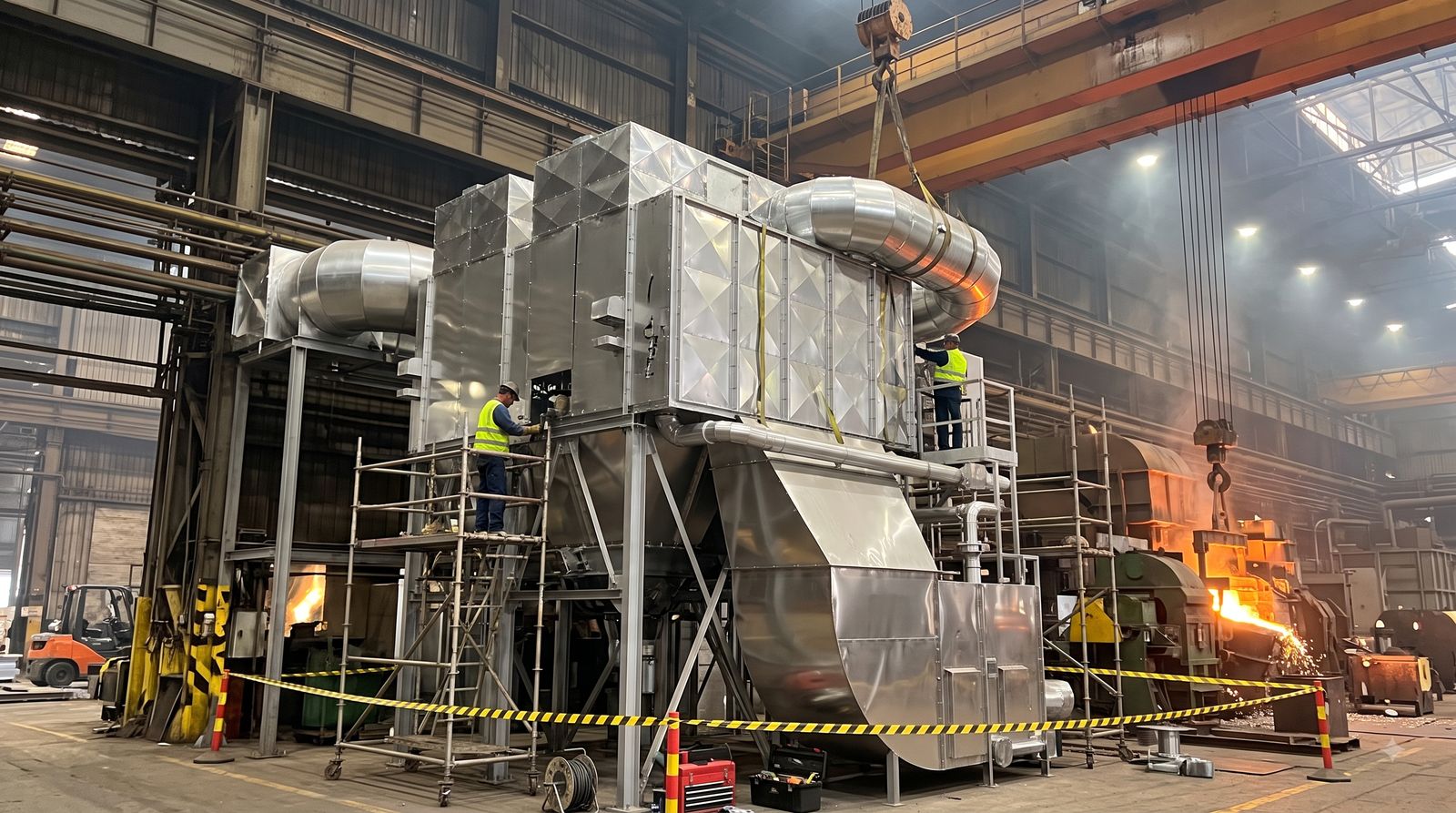
Foundry
135,000 ACFM of EAF Fume Capture
Canopy hoods, ducting, collector and discharge designed as one system rather than five purchases.
Talk to an Engineer
Tell us the process conditions and the constraints. We’ll tell you what’s achievable and what it takes.