
Home / Applications / Grain & Feed Handling
Application
Grain, Feed and Bulk Agricultural Handling
NFPA 61 treats the facility as a system. Protecting the collector alone satisfies neither the standard nor the risk.
The Problem
Grain dust is combustible, and grain handling has produced some of the most severe dust explosions in industrial history. Receiving, elevating, cleaning, milling and loadout each generate dust — and the legs and conveyors connecting them will propagate an ignition between them.
Why This Is a System Problem
A single well-protected collector on a facility with unprotected legs and galleries has not addressed the hazard. NFPA 61 treats the facility as a system, and a design that protects only the collector satisfies neither the standard nor the risk.
The second issue is that grain dust behaviour varies with moisture content, which varies with the harvest. A system commissioned in a dry season meets different material in a wet one.
What We Specify
Collection at each generation point, sized for that point rather than a facility average.
Explosion protection sized to NFPA 61 — the agricultural standard, which differs from NFPA 654 in ways that catch operations assuming the general standard applies.
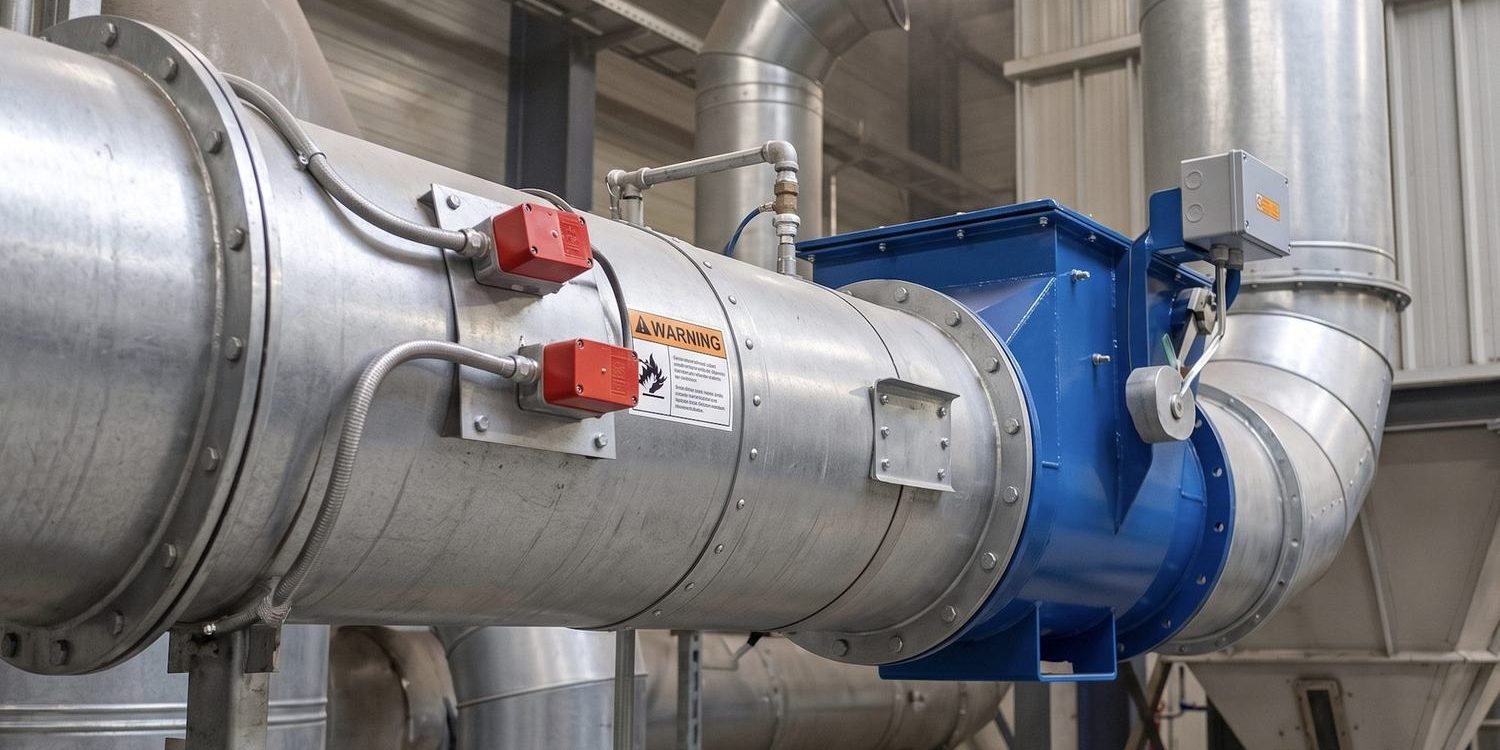
Isolation between collection points, so a deflagration cannot travel through the ducting from one part of the facility to another.
A decision, made explicitly, on whether captured material returns to process or to waste. Returning it is economic; it is also a hygiene and quality question that deserves an answer rather than a default.
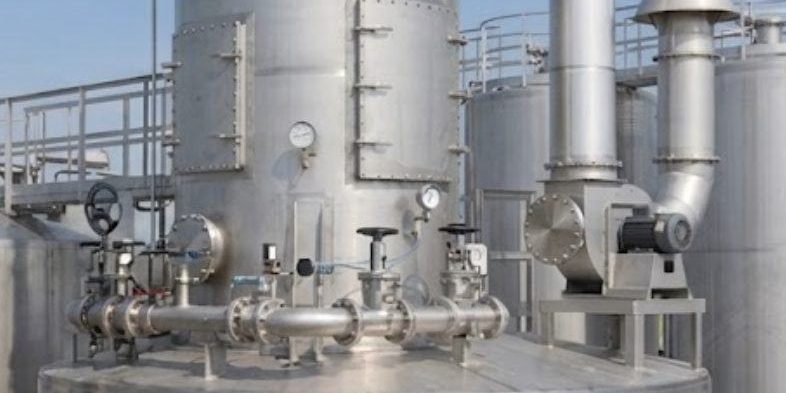
Sanitary stainless construction with smooth welds and minimal crevices, protection sized from the specific material rather than a general assumption. Capture efficiency improved 7%.
Read the full case study →Where This Applies
Grain elevators and terminals, feed mills, flour and corn milling, seed processing, pet food manufacture, and ethanol feedstock handling.
Related equipment
What we typically specify

Tell Us About the Application
Send us the process, the material and the constraint. We will tell you what we would specify — and if something simpler would serve you better, we will say so.