
Home / Industries / Cement & Aggregates
Industry
Dust Collection for Cement, Aggregates and Asphalt
Abrasive particulate, kiln heat, and a permit with continuous monitoring. Three constraints that pull against each other, and the air-to-cloth decision that resolves them.
The Dust
Cement and aggregate processing produces some of the most abrasive particulate in industry. Clinker dust, raw meal, limestone and silica sand are hard, angular, and present in high concentration. Kiln and clinker cooler exhaust arrives hot. Silo filling and transfer points produce dense intermittent surges rather than steady load.
What Makes It Difficult
Three constraints at once, and they pull against each other.
Abrasion. Angular particulate wears filter media mechanically. A media choice that suits fine chemical powder fails within months here.
Heat. Kiln exhaust and clinker cooler air arrive well above what standard polyester tolerates. Media selection is governed by continuous temperature and by excursion temperature — two different numbers, and specifying against the first alone is the most common failure we are called to correct.
Permit pressure. Cement plants operate under specific emissions limits with continuous monitoring. A collector drifting toward its limit is a compliance problem before it is a maintenance problem.
What We Specify
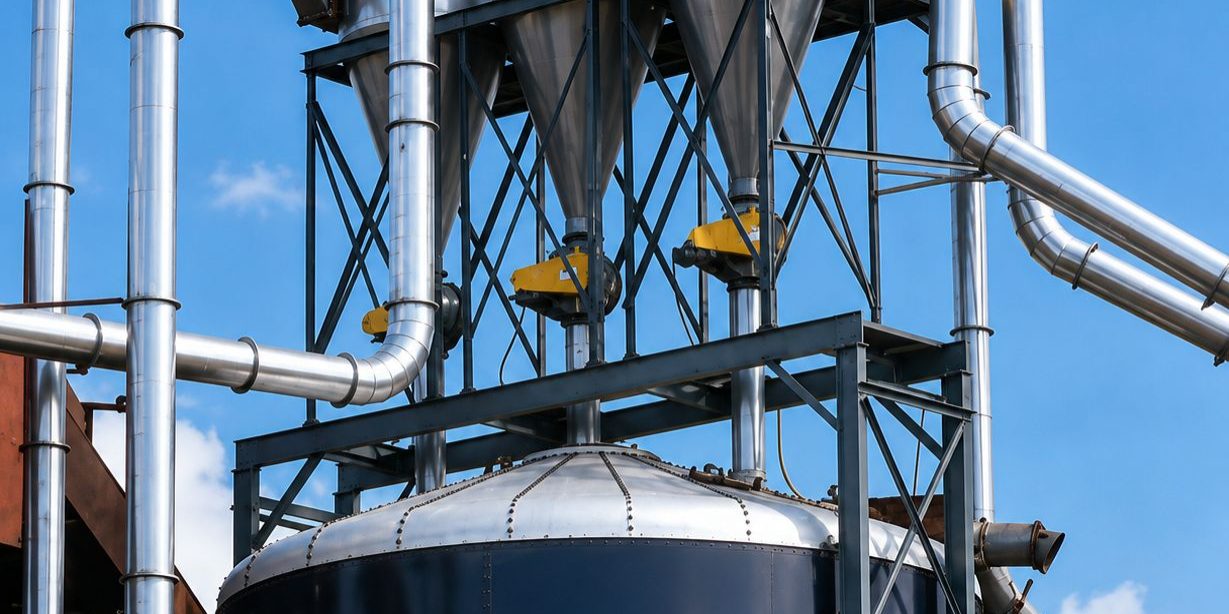
Pulse jet baghouses in most positions, sized conservatively. Where dust loading is very high, a mechanical cyclone ahead of the baghouse removes the coarse fraction and takes the abrasive load off the media — cheaper to own than sizing the baghouse to absorb it.
Air-to-cloth ratio is the decision that matters most. Catalogue selections in this industry commonly run 4.5:1 or higher. We typically specify 3.5:1 to 4.0:1. The housing costs more; the media lasts far longer, and the arithmetic favours the housing within about two years.
Media: PTFE membrane on fibreglass or aramid substrate where temperature demands it. Abrasion-resistant liners in the inlet plenum where velocity is high.
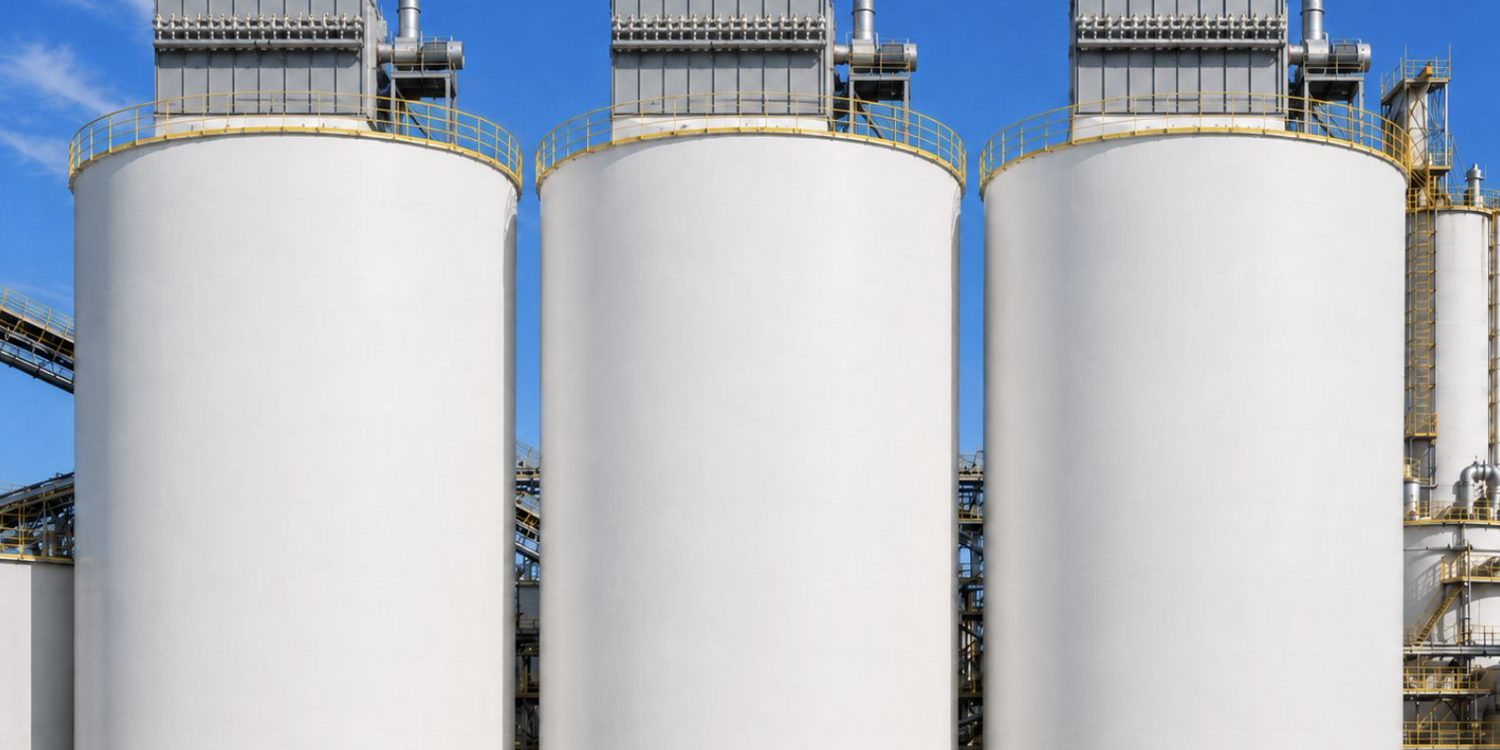
Bin vents on silos and weigh hoppers sized for displacement volume during filling, not for a continuous rate.
92,000 ACFM running at 4.5:1, sitting at the edge of its emissions permit. We pulled the ratio back to 3.8:1 and specified PTFE-membrane bags. Bag life rose 55%, maintenance hours halved, and emissions settled below 70% of permit.
Read the full case study →Regulatory Context
Cement and aggregate operations fall under NESHAP and state permits with continuous opacity or particulate monitoring. Silo filling is covered separately. Where the plant burns coal or petcoke, combustible dust requirements apply to that side of the operation and NFPA 654 becomes relevant.
Related equipment
What we typically specify here
Product
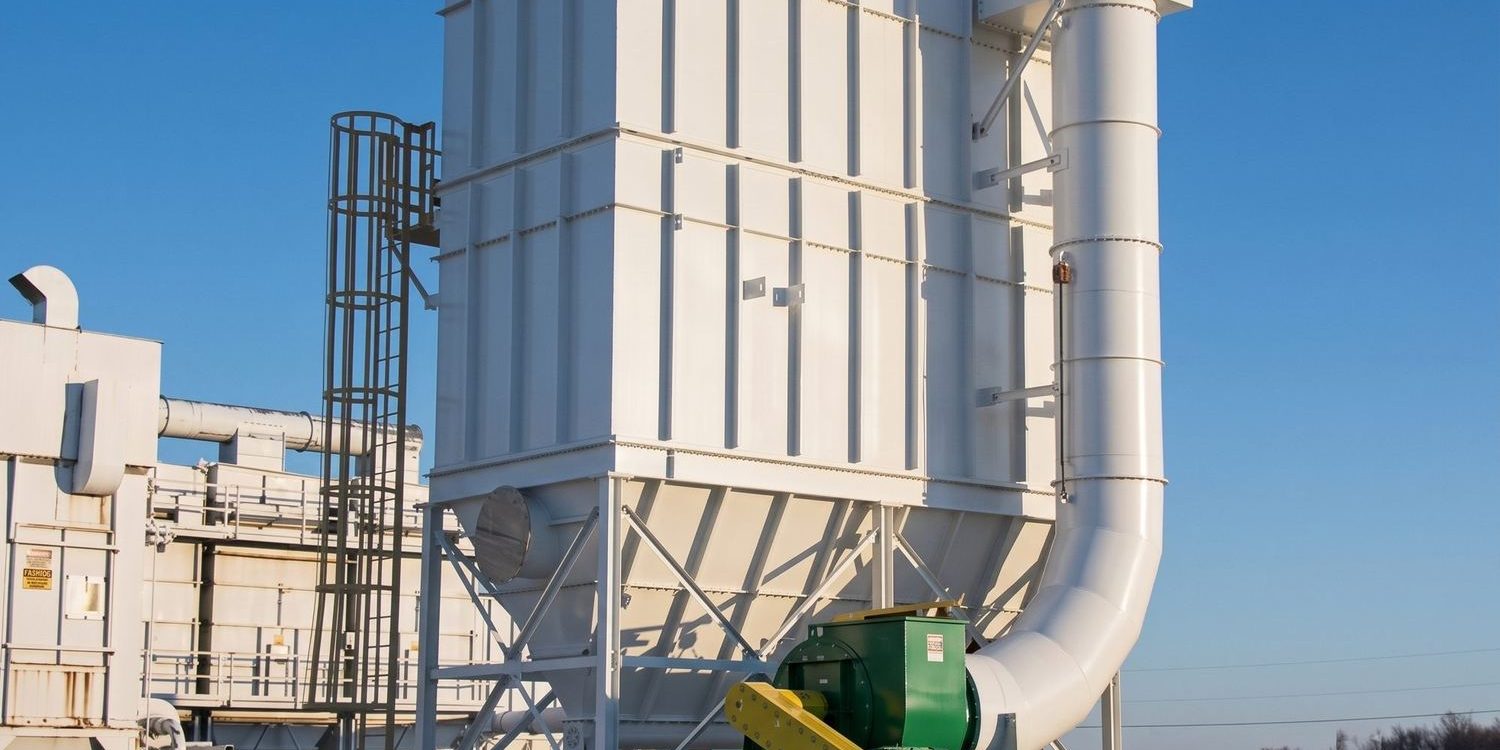
Baghouse Dust Collectors
Pulse jet fabric filtration for high loading, high temperature, abrasive particulate.
Tell Us What You Process
Send us the material, the process and the constraint. We will tell you what we would specify.