
Home / Case Studies / 135,000 ACFM of EAF Fume Capture, …
Foundry & Metal Casting
135,000 ACFM of EAF Fume Capture, and a Melt Shop That Cleared
Replacing a 25-year-old system on two electric arc furnaces — engineered for 550°F continuous with 700°F excursion capability and full explosion protection.
Services
Fifty Years of Casting, and a Collector From a Quarter of It
A steel foundry in the Great Lakes region, operating more than fifty years, producing high-quality castings for heavy equipment, mining, and industrial machinery. Two electric arc furnaces form the melting operation, with combined capacity above 150 tons per heat.
EAF melting generates enormous volumes of hot fume and fine metallic dust — iron oxide, other metallic particulate, and trace volatiles. Capture and filtration matter equally for worker safety inside the melt shop and for compliance outside it.
The system serving both furnaces had been in service over 25 years and, despite incremental upgrades, could no longer handle current production.
At a glance
| Industry | Steel foundry / metal casting |
|---|---|
| Airflow | 135,000 ACFM |
| Temperature | 400–600°F, spiking above 700°F |
| Challenge | Thermal stress and abrasive metallic dust |
| Solution | Custom high-temperature pulse jet baghouse |
The challenge
What They Were Facing
Capacity that hadn’t kept pace
Production had grown; the collection system hadn’t. During melting and refining, visible fugitive emissions were escaping the canopy hoods, hazing the melt shop and raising worker exposure.
Abrasive metallic dust and fire risk
High fine-metallic content accelerated wear on bags, duct elbows, and dampers. The same fines carried fire and explosion risk that the older system was not equipped to manage.
Thermal stress
EAF exhaust routinely reached 400–600°F and spiked above 700°F during certain phases of the heat. The existing baghouse and ductwork were suffering thermal fatigue, with structural consequences and constant maintenance intervention.
A DHA with gaps in it
Alongside regulatory pressure to reduce emissions, a Dust Hazard Analysis identified explosion protection shortfalls requiring correction against current NFPA standards.
Our approach
Designed Around the Heat Cycle, Not an Average
CPE Filter Systems was selected for experience in high-temperature and metallurgical dust applications. Our engineers profiled the existing system — airflow measurement, temperature profiling across the full heat cycle, dust sampling, and review of operational cycles.
The design that followed was built specifically around EAF service:
- High-temperature construction rated for 550°F continuous with excursion capability to 700°F
- Robust inlet and manifold design protecting bags from direct abrasion by metallic particulate
- Specialised high-temperature media selected for dust release as much as thermal rating
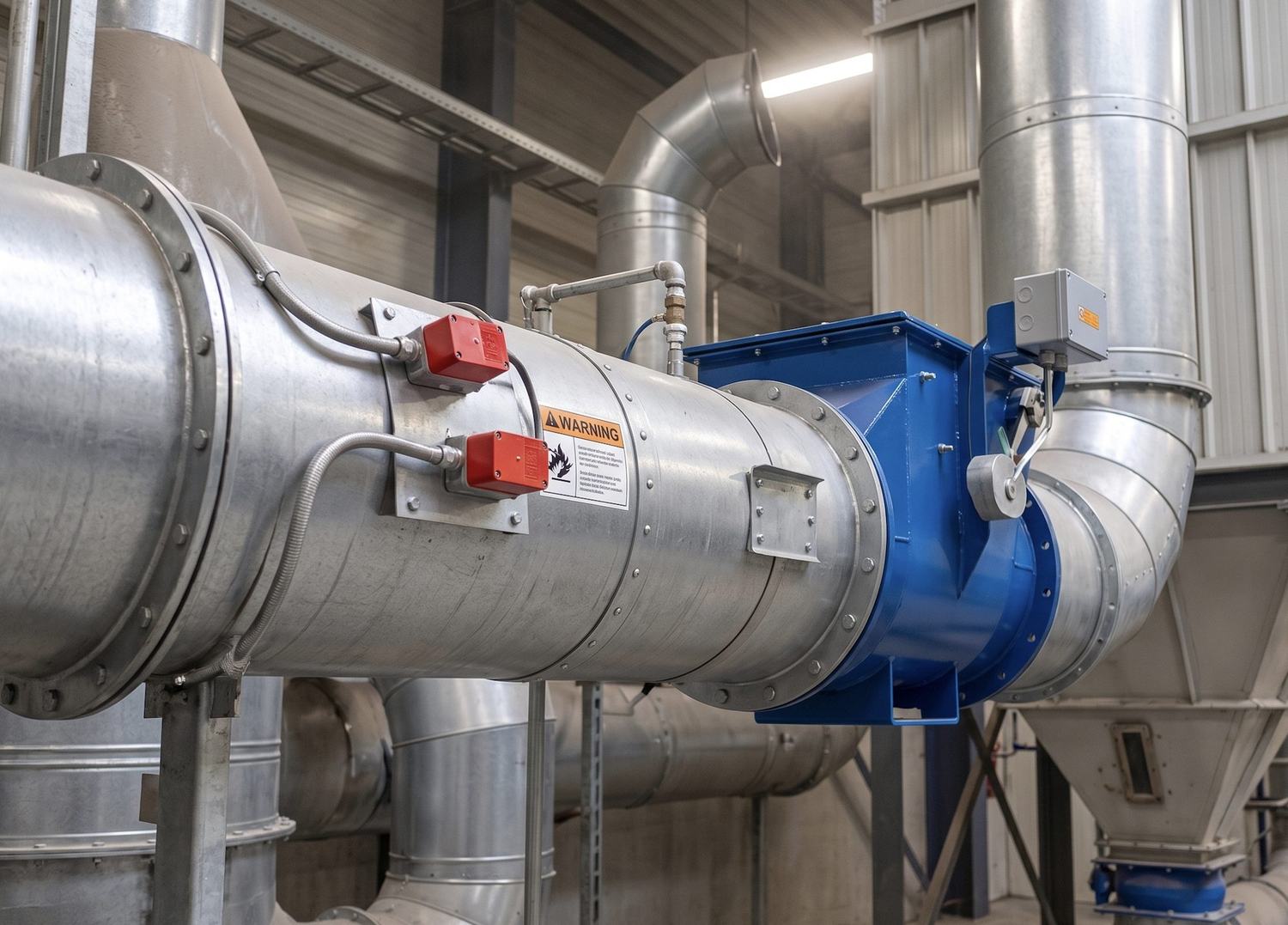
- Integrated spark detection and suppression, with deflagration venting and explosion isolation valves
We also modified the existing canopy hoods and ductwork to improve capture efficiency at source — the fugitive emission problem was as much a capture problem as a filtration one.
Specifications
As Built
| Airflow capacity | 135,000 ACFM |
|---|---|
| Design temperature | 550°F continuous, 700°F excursion |
| Filter media | High-temperature fibreglass, special coating |
| Air-to-cloth ratio | 3.5:1 |
| Cleaning system | Low-pressure pulse jet, optimised pulsing |
| Housing construction | Heavy-gauge carbon steel, high-temperature insulation |
| Safety systems | Spark detection and suppression, explosion venting |
| Access | Full walk-in clean air plenum with platforms |
| Discharge | Dual rotary airlocks with screw conveyors |
Major components were fabricated off-site and delivered in modules so installation could proceed during planned furnace outages without disrupting the production schedule. CPE Filter Systems supervised throughout, working with foundry maintenance and engineering on integration and controls, and delivered training covering operation, maintenance, and the function of each explosion protection component.
Results
What Changed After Commissioning
Compliance margin under the hardest conditions
The foundry now holds below 90% of its permitted emission limit even through peak production periods. EAF fume is among the most demanding duties in industrial dust collection — high volume, high temperature, and highly variable across the phases of a heat — and maintaining a consistent margin during peak output was the outcome the plant most needed.
Bag replacement frequency down a quarter
Better gas distribution, appropriate media selection for the thermal duty, and optimised cleaning parameters have together cut bag replacement frequency by 25% against the previous system, with the associated maintenance cost and outage time removed.
Capture at source, not just filtration
Fugitive emissions in the melt shop have dropped sharply. Operators report noticeably cleaner air and better visibility during furnace operation. This was as much a capture problem as a filtration one, and the canopy hood and ductwork modifications are a significant part of the result.
Safety profile
Spark detection and suppression, combined with venting and isolation, closed the gaps the Dust Hazard Analysis had identified — the item driving both regulatory and insurer attention.
Related
More From CPE Filter Systems
Product
Baghouse Dust Collectors
The equipment supplied on this project, with full specifications.
Product
Combustible Dust Collection
Explosion protection engineered into the filtration system.
Product
Ductwork
Capture hood and duct modifications were half the result here.
Facing Something Similar?
Every one of these started with a site assessment — gas flow measurement, dust sampling, and a look at your operating data. Tell us what you’re dealing with.