
Home / Applications / Kiln & Dryer Exhaust
Application
Kiln, Dryer and Furnace Exhaust Filtration
Two temperatures decide the specification — continuous and excursion. Design for the first alone and the media fails during the upset.
The Problem
Process exhaust arrives hot, sometimes carrying moisture, sometimes carrying condensables. Standard media fails and standard housings are not rated for it. The failures here are expensive because they happen during production.
The Two Numbers That Matter
Continuous operating temperature and excursion temperature are different numbers, and specifying against the first while ignoring the second is the most common failure we are called to correct. Media survives normal running and destroys itself during an upset — a burner trip, a process hold, a restart.
The second trap is dew point. Where exhaust contains moisture, operating below dew point condenses on the media and blinds it permanently. No cleaning cycle recovers a bag that has been wetted with a hygroscopic dust on it. Insulation, trace heating and bleed air are design decisions, not accessories to add later.
What We Specify
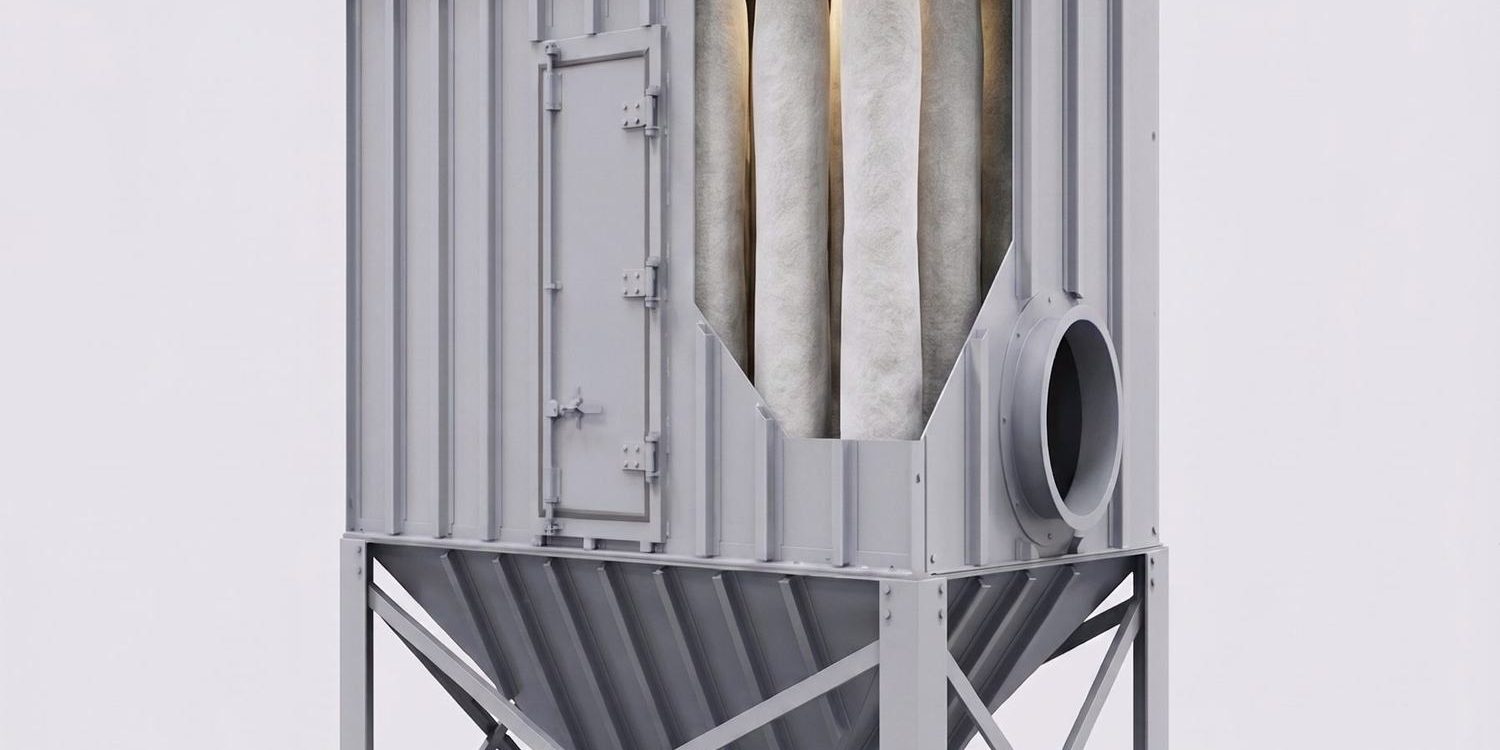
Media selected against excursion temperature: fibreglass, P-84 or PPS depending on the chemistry as well as the heat. Aramid where 400°F continuous is the ceiling.
Housings insulated or trace-heated where dew point is a risk, with the calculation shown rather than assumed.
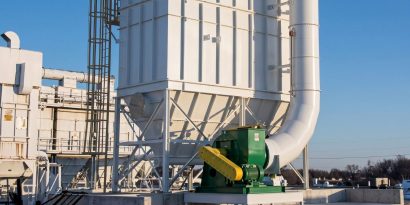
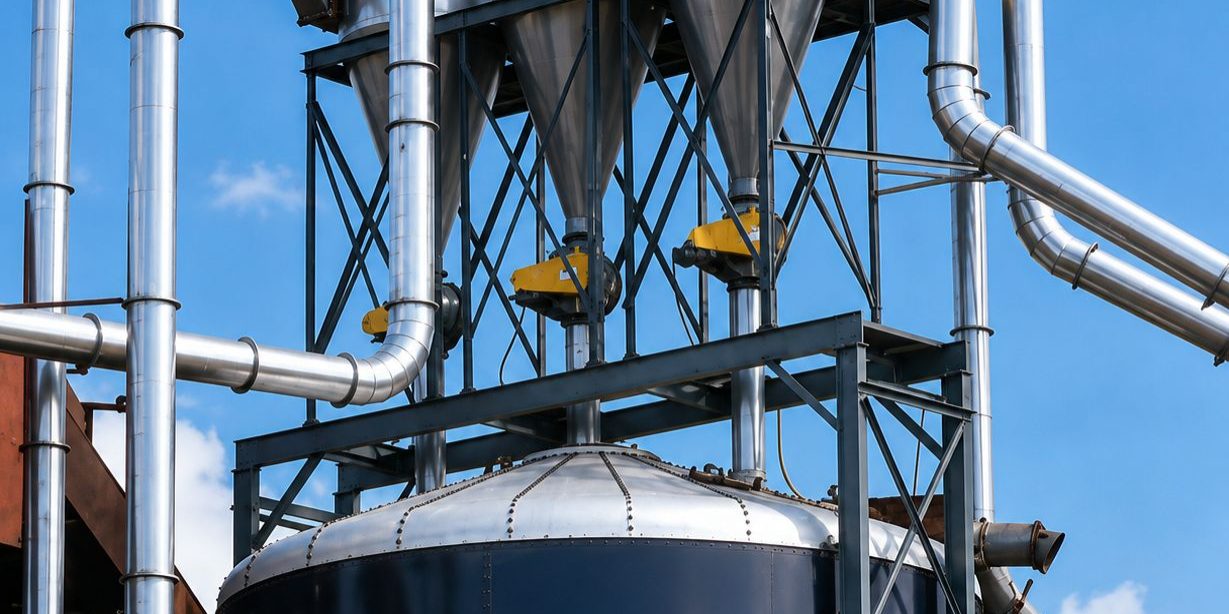
Cyclone pre-cleaning where loading is high enough to make it economic — on a kiln or dryer it usually is, and it takes both the abrasive and the thermal load off the media.
Expansion allowance in ducting. Hot ducting moves, and ducting that cannot move cracks at the joints.
135,000 ACFM of EAF fume specified against the excursion figure rather than the continuous one. Bag replacement frequency fell 25% and emissions held below 90% of limit at peak production.
Read the full case study →Where This Applies
Cement and lime kilns, rotary and flash dryers, asphalt plant dryers, furnace and melt shop exhaust, calciners, and thermal oxidiser outlets.
Related equipment
What we typically specify
Tell Us About the Application
Send us the process, the material and the constraint. We will tell you what we would specify — and if something simpler would serve you better, we will say so.