
Home / Products / Pulse Cleaning / Cartridge Collectors
Industrial Cartridge Dust Collectors
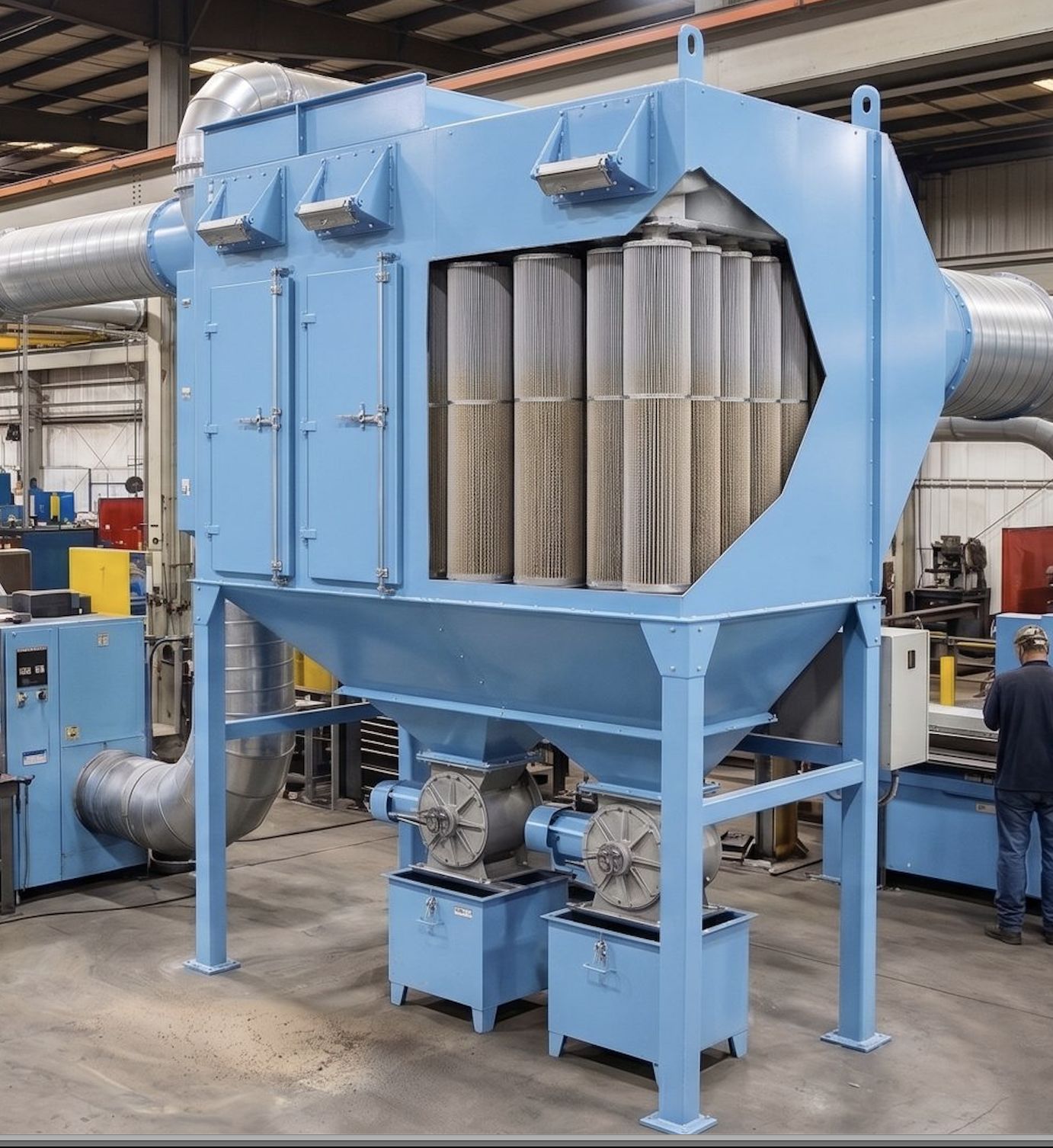
Pleated media packs substantially more filtration area into the same housing volume — the answer when dust is fine and light, and floor space is the binding constraint.
Product overview
More Filtration Area in Less Floor Space
A cartridge collector folds its media into pleats. That geometry puts several times the filtration area into a housing a fraction of the size of an equivalent baghouse — which is why cartridge units dominate in plants where floor space was allocated long before the dust problem appeared.
The trade-off is real and worth stating plainly: pleats hold fine dust well but shed heavy or fibrous loading poorly, and abrasive particulate wears pleated media faster than it wears bags. Where loading is heavy or gas is hot, a baghouse remains the better engineering answer.
CPE Filter Systems specifies cartridge collectors where they genuinely suit the duty — welding and plasma fume, machining and grinding dust, laser cutting, and light powder handling — and says so when they don’t.
Deciding between cartridge and baghouse? The selection matrix on the products page compares both against eleven process constraints.
Key features
Configuration & Capability
Heavy-Duty Construction
Pleated elements deliver a large media area per unit of housing volume, allowing a smaller collector for the same airflow.
- Compact footprint for constrained plants
- Lower installed height than equivalent baghouse
- Suits mezzanine and in-plant siting
Fast Cartridge Changes
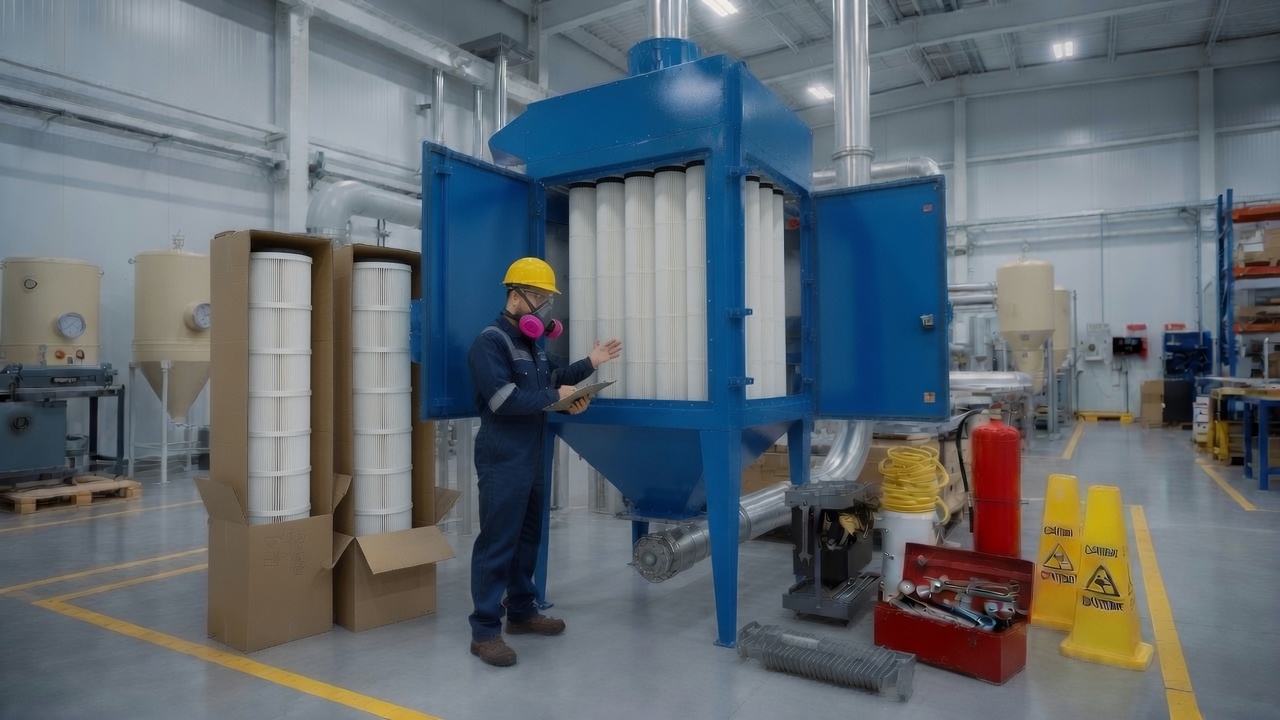
Side-access cartridge removal means changeouts happen from a platform rather than inside the housing.
- Tool-free clamping options
- No entry into the dirty plenum
- Shorter maintenance windows
Efficient Fine Dust Capture
Pleated media with appropriate surface treatment captures sub-micron particulate at high efficiency.
- Nanofibre and PTFE membrane options
- Suits welding and machining fume
- HEPA final stage available
Pulse Cleaning On-Line
Compressed air pulses release the dust cake without taking the collector off-line.
- Timer or differential-pressure initiated
- Continuous duty operation
- Low-pressure cleaning to protect media
Technical specifications
Specifications
Standard ranges — every unit configured to application
| Cartridge access | Side removal |
| Media options | Cellulose blend, spunbond polyester, nanofibre, PTFE membrane |
| Cleaning system | Pulse jet, timer or ΔP initiated |
| Housing construction | Carbon steel; 304 stainless available |
| Discharge | Hopper with drum, rotary airlock, or screw conveyor |
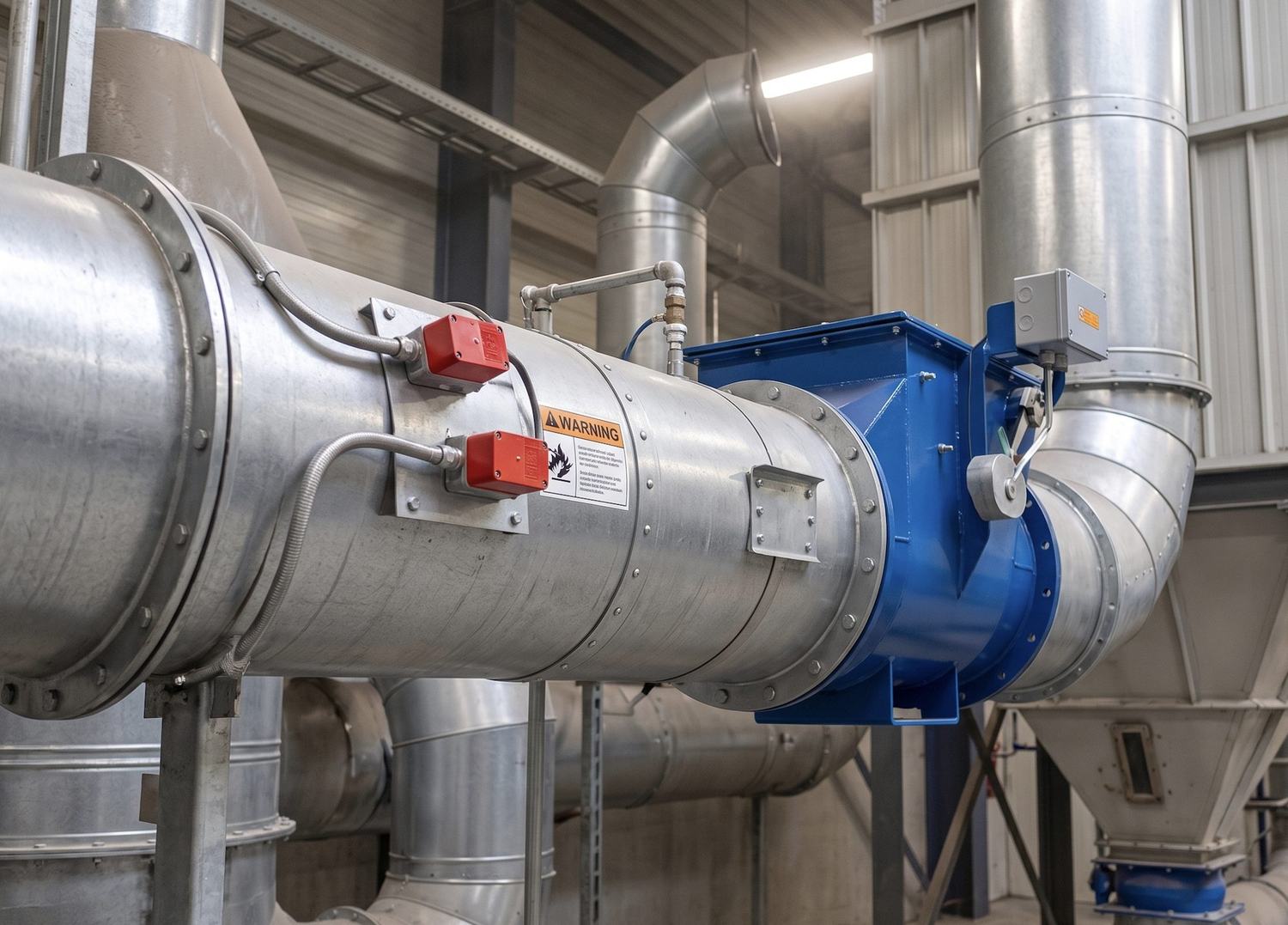
| Explosion protection | Venting, isolation, spark detection — per DHA |
Compliance & safety
Engineered to the Standards You’re Audited Against
Where the dust is combustible, filtration efficiency is only half the design problem. We integrate deflagration venting, explosion isolation, spark detection, and grounding provisions specified against your Dust Hazard Analysis — not bolted on afterwards.
ATEXFM GLOBALMSHAUL / CSA
Industries
Where It Works
Fume
Metal Fabrication
Welding and plasma cutting fume, grinding and deburring dust.
Fine dust
Machining
Dry machining, laser cutting, and surface finishing operations.
Containment
Pharmaceutical
Light powder handling under containment, with HEPA final stage.
Mixed duty
General Manufacturing
Mixed light dust from assembly, packaging, and finishing lines.
Combustible
Woodworking
Sanding dust and light composite particulate.
Sanitary
Food Processing
Light powder and ingredient dust in stainless configurations.
Proof
Baghouses in Service
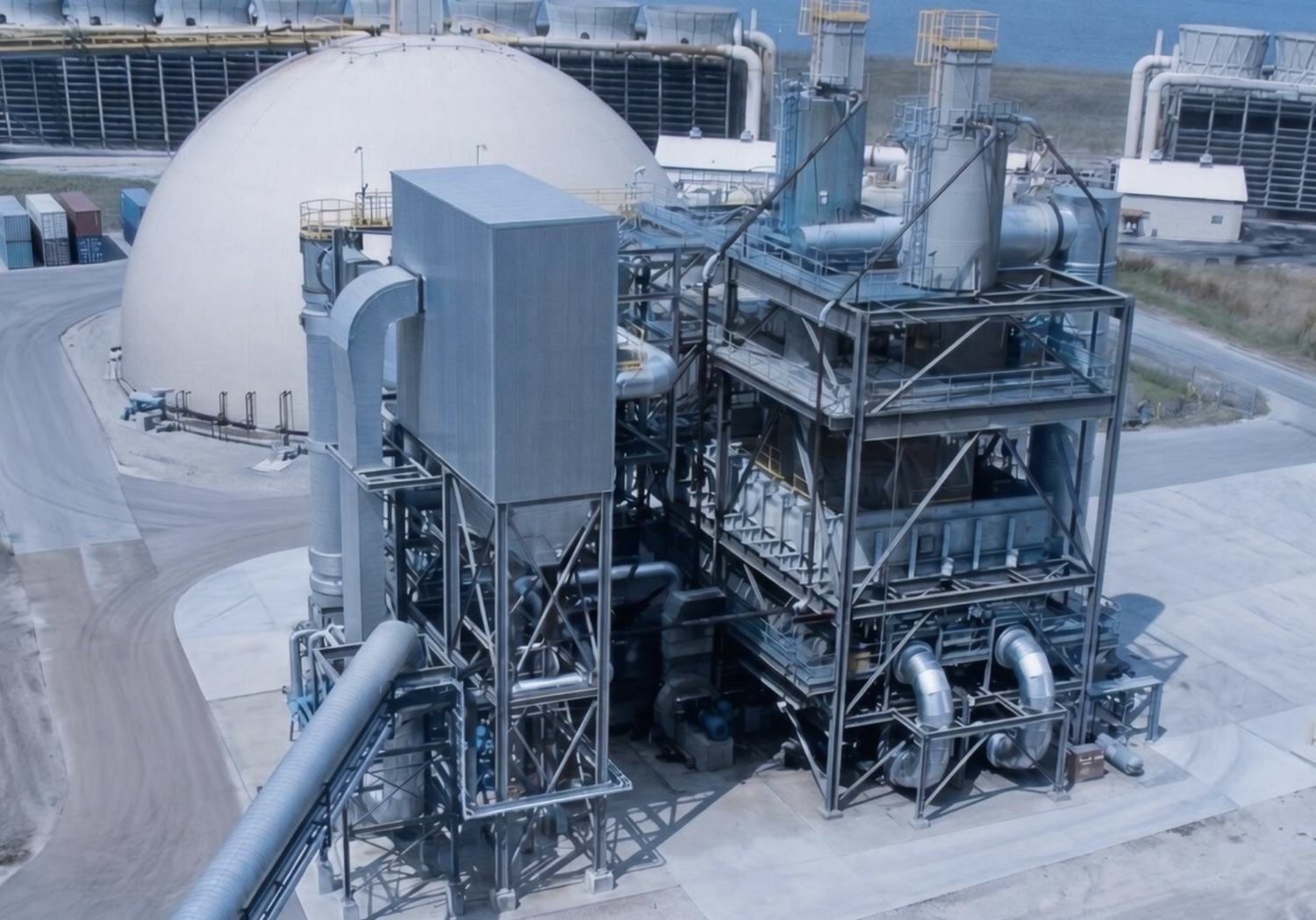
Metal Recycling
Multiple ageing collectors replaced by one central system
Fugitive emissions down 75%
Common questions
FAQs
When should I choose cartridge over baghouse?
When your dust is fine and light, floor space or headroom is tight, and gas temperature is moderate. Where dust loading is heavy, particulate is abrasive, or gas exceeds roughly 350°F, a baghouse will hold up better and cost less to run over its life.
How long do cartridges last?
It depends heavily on loading and dust character. Fine, dry, non-abrasive dust at a conservative air-to-media ratio can give multiple years. Abrasive or sticky dust can cut that sharply — which is usually a signal the technology is wrong for the duty rather than the cartridge being at fault.
Can cartridge collectors handle combustible dust?
Yes, with appropriate protection specified against your Dust Hazard Analysis — deflagration venting, isolation, and spark detection. The pleated geometry does hold more retained dust than bags, which is a factor in the protection design.
Do you supply replacement cartridges for other makes?
Yes. See replacement parts.
Tell Us About Your Application
Send us your airflow, dust type, temperature, and plant constraints. Our engineers will size a system for your process — and tell you plainly if something else would serve you better.