
Product overview
No Media, No Changeouts, No Blinding
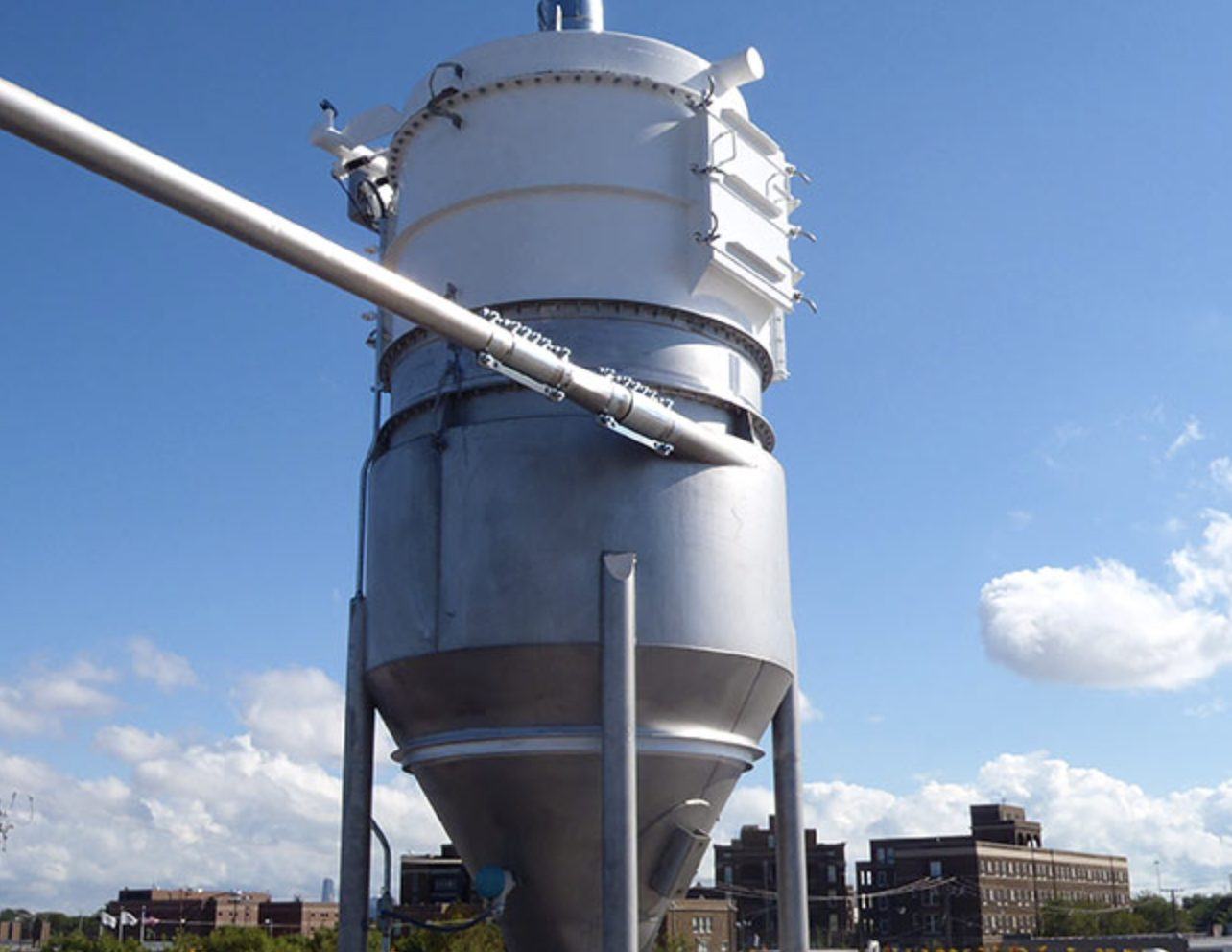
A cyclone separates by inertia. Dust-laden air enters tangentially, spins, and heavier particles are thrown to the wall and fall out. Nothing filters, so nothing blinds, wears out, or needs replacing.
That makes cyclones the right answer for coarse abrasive dust that would destroy fabric media, and for very high temperatures where filter media becomes impractical. It also makes them an excellent pre-cleaner: put a cyclone ahead of a baghouse and it removes the bulk loading and the abrasive fraction before the bags ever see it, extending filter life substantially.
The honest limitation is efficiency on fine particulate. Below roughly 10 microns, cyclone efficiency falls away. Where the permit or the exposure limit demands fine capture, a cyclone alone will not get you there.
Best used in series. A cyclone pre-cleaner ahead of a baghouse is one of the most cost-effective configurations in heavy industry — the cyclone takes the abrasion, the baghouse takes the fines.
Key features
Configuration & Capability
No Consumables
No filter media means no replacement cost and no changeout downtime.
- Zero media spend
- No blinding or binding
- Very long service life
High Temperature
Operates well beyond the limits of most filter media.
- No media temperature ceiling
- Refractory lining available
- Suits kiln and furnace duty
Abrasion Tolerant
Abrasion-resistant liners handle particulate that would shred fabric.
- Ceramic and AR liner options
- Replaceable wear sections
- Heavy-gauge construction
Effective Pre-Cleaning
Removes bulk and abrasive loading ahead of a fabric collector.
- Extends downstream filter life
- Reduces baghouse size required
- Recovers coarse product fraction
Technical specifications
Specifications
Standard ranges — every unit configured to application
| Effective particle range | Generally above 10 μm |
| Filter media | None required |
| Housing construction | Carbon steel; abrasion-resistant liners available |
| Configuration | Single, twin, or multiclone arrangements |
| Discharge | Rotary airlock, drum, or direct to conveyor |
| Typical use | Standalone on coarse dust, or pre-cleaner ahead of fabric collector |
Compliance & safety
Engineered to the Standards You’re Audited Against
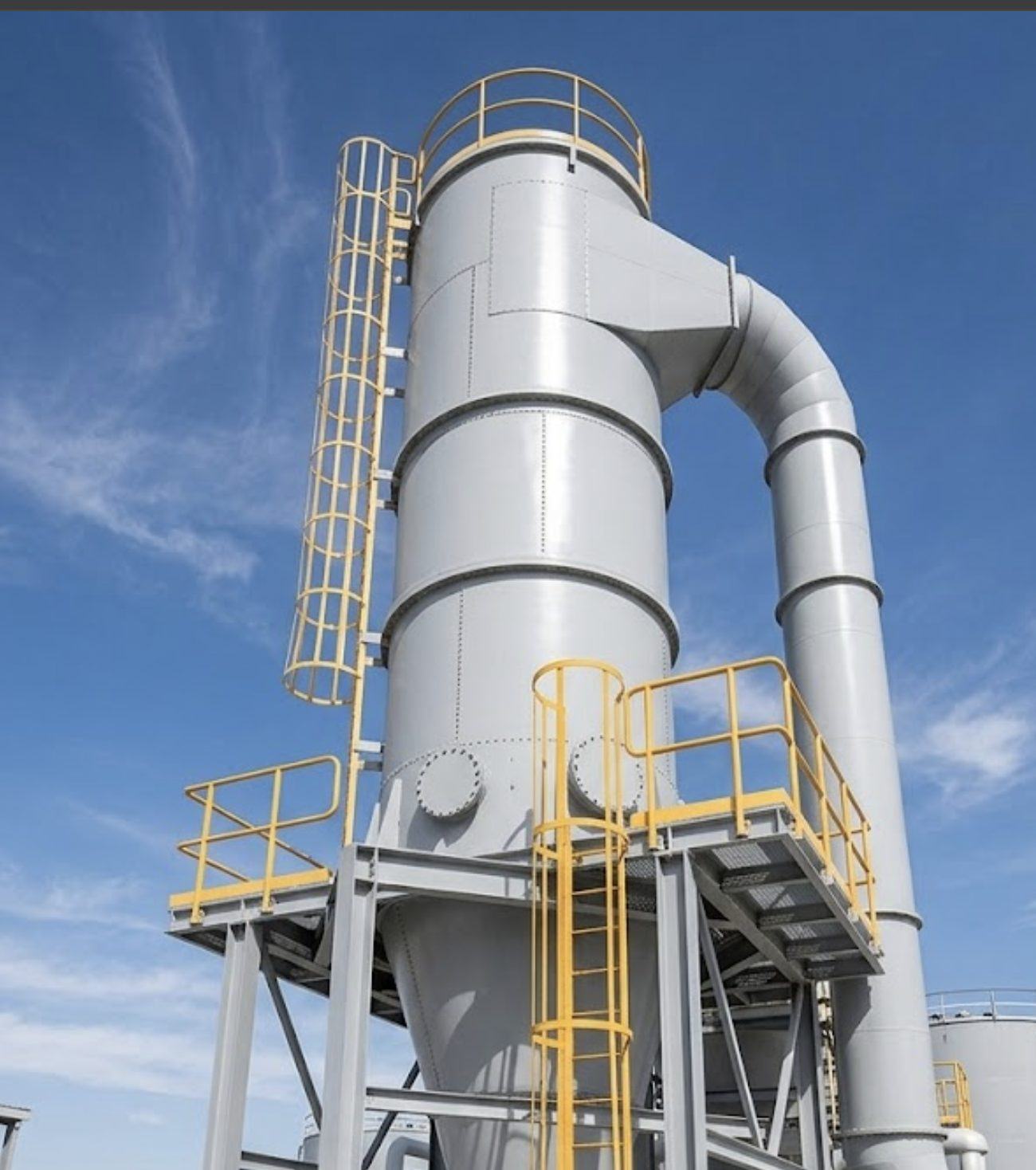
Where the dust is combustible, filtration efficiency is only half the design problem. We integrate deflagration venting, explosion isolation, spark detection, and grounding provisions specified against your Dust Hazard Analysis — not bolted on afterwards.
ATEXFM GLOBALMSHAUL / CSA
Industries
Where It Works
Coarse
Aggregates
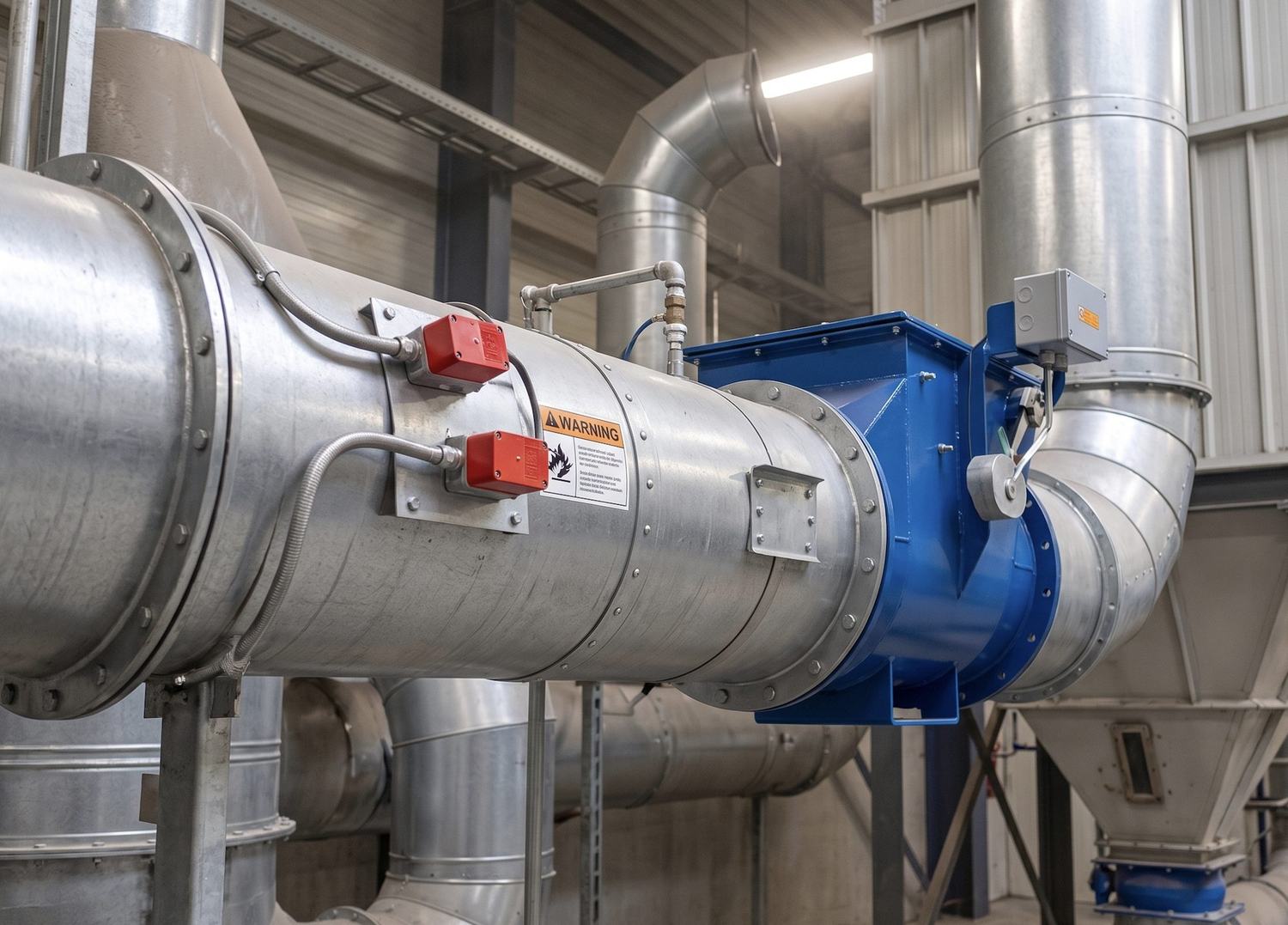
Crushing, screening, and conveying of stone and mineral products.
High temp
Cement
Clinker handling and high-temperature process streams.
Bulk
Woodworking
Chip and shaving collection ahead of a fabric collector.
Product recovery
Grain & Agriculture
Chaff, hull, and coarse organic fractions.
Abrasive
Foundry
Sand reclamation and shakeout pre-cleaning.
Wear
Metal Processing
Coarse metallic fines with high abrasion.
Proof
In Service
Cement & Aggregates
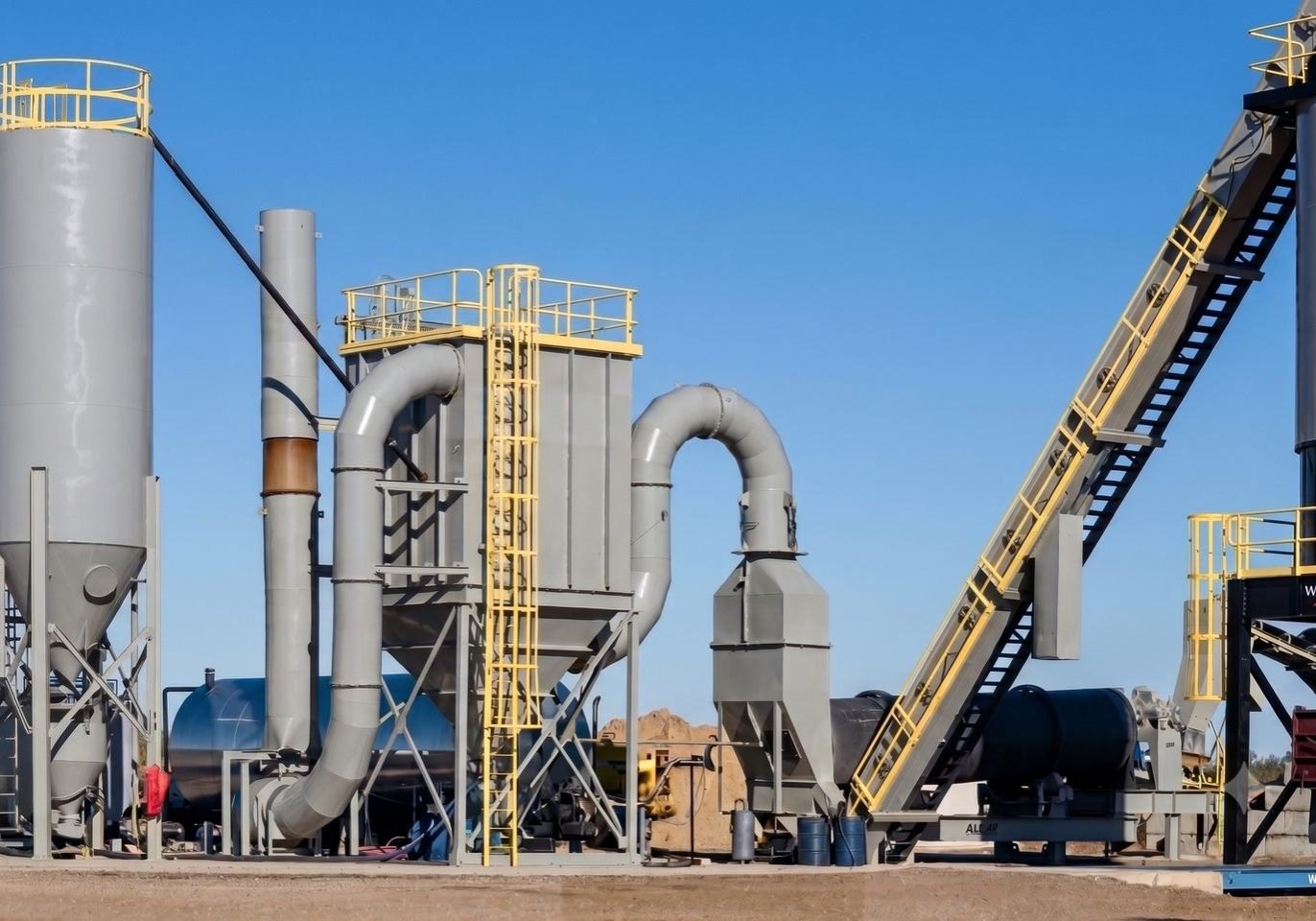
92,000 ACFM baghouse for a kiln at the edge of its permit
Bag life 11 → 17 months
Common questions
FAQs
Will a cyclone meet my emission limit?
On its own, usually not, unless your dust is coarse and your limit is generous. Cyclone efficiency falls off below about 10 microns. For fine particulate you need a fabric collector, and a cyclone in front of it is often the most economical way to get there.
How much does a pre-cleaner extend bag life?
It depends on how much of your loading is coarse and abrasive, but on heavy abrasive duty the improvement can be substantial. It is worth modelling against your specific dust rather than assuming a figure.
What maintenance do cyclones need?
Very little. Inspection of the liner and discharge, and periodic checks for wear at the inlet and cone. There is no media to change.
Tell Us About Your Application
Send us your airflow, dust type, temperature, and plant constraints. Our engineers will size and configure a system for your process — and tell you plainly if something else would serve you better.